


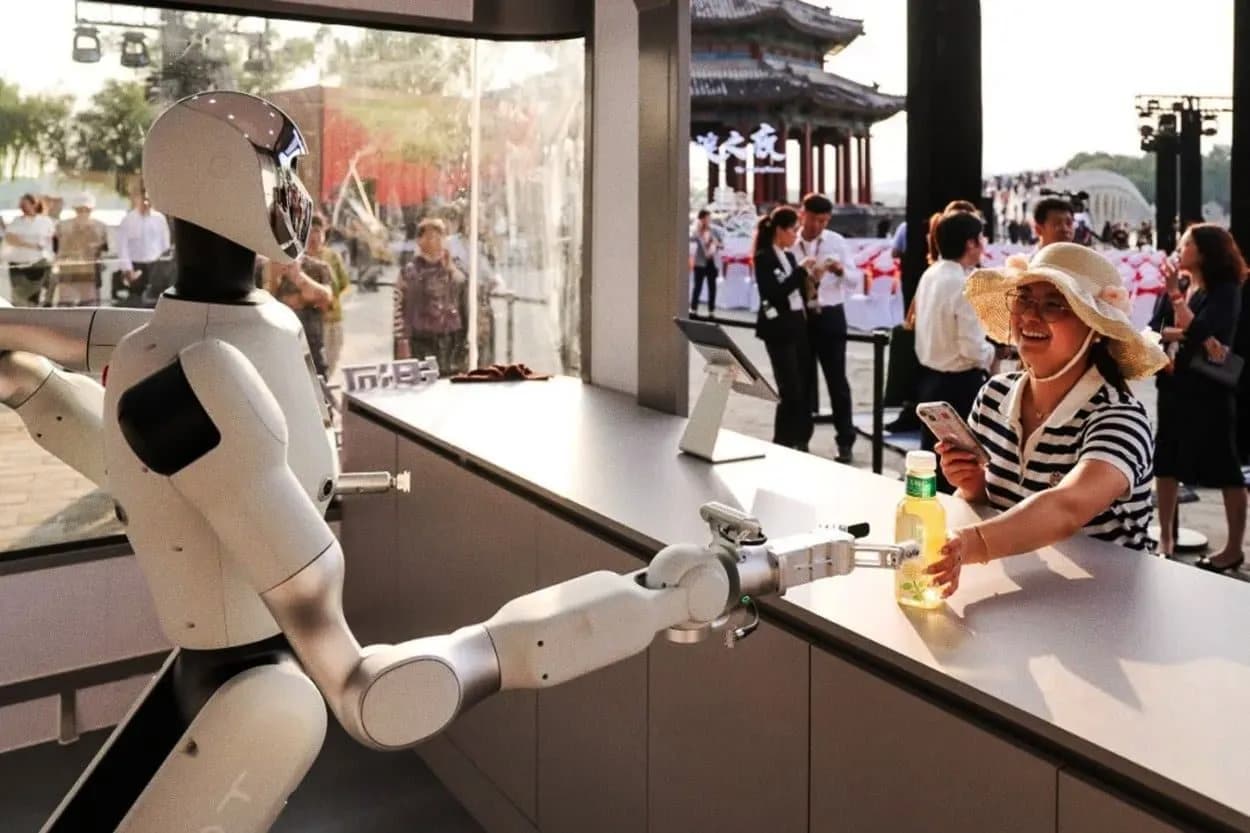
The store will be operated by the Xiao Gai robot, which can restock items, interact with customers, and process payments without any human staff.
A new format of a 24-hour convenience store, fully managed by a humanoid robot, is preparing to open in Hong Kong. Positioned as the city's first retail facility of its kind, the project is being deployed as a mobile "capsule" on the Hung Hom Promenade.
The leading role in the store will be played by a robot named Xiao Gai, developed by the Chinese company Galbot. According to the organizers, it is capable of independently restocking shelves, picking items, and serving customers at the checkout counter without human intervention.
Standing at approximately 1.68 meters tall with an arm span of about 1.8 meters, the robot can operate within the store's confined space and perform basic handling tasks. Its control system is powered by an AI model that also enables verbal interaction with visitors.
The store will operate around the clock, offering a wide range of products—from snacks to over-the-counter medications. The robot will be able to engage in simple dialogues and switch between multiple languages, adapting to the flow of both tourists and local residents.
The project's initiators, including the Hong Kong Investment Corporation, view it as a demonstration of how artificial intelligence is beginning to integrate into everyday urban infrastructure, transitioning from a mere experiment into a fully functional service.
According to Galbot's estimates, the novelty of this format could increase foot traffic in the area by up to 40%. Looking ahead, the company plans to scale the model to 100 similar robotic stores across ten cities.
This experiment aligns with a broader trend of deploying robotic systems in the service sector. For instance, Tokyo's Haneda Airport is already testing robotic baggage handling systems, while pilot projects aimed at replacing portions of staff with autonomous devices are emerging in various countries.
However, the industry remains vulnerable to system glitches and erratic behavior. Incidents of malfunction among service robots have been recorded previously, including episodes of uncontrolled movements and errors by autonomous AI agents managing commercial processes. This highlights that despite rapid technological growth, the transition to fully autonomous retail remains in an experimental phase.