

Instacart has tripled the deployment of its Caper Cart smart shopping carts, which track items in the basket, display advertisements, and utilize data from over 1.6 billion online orders for personalization.
Instacart is expanding the rollout of its Caper Cart smart shopping carts in American supermarkets. Together with the grocery store chain Weis Markets, the company announced the launch of these carts in a number of stores across the state of Pennsylvania. The system not only automatically accounts for products but also tracks customer behavior in real time, displaying advertisements and personalized offers directly during the shopping process.
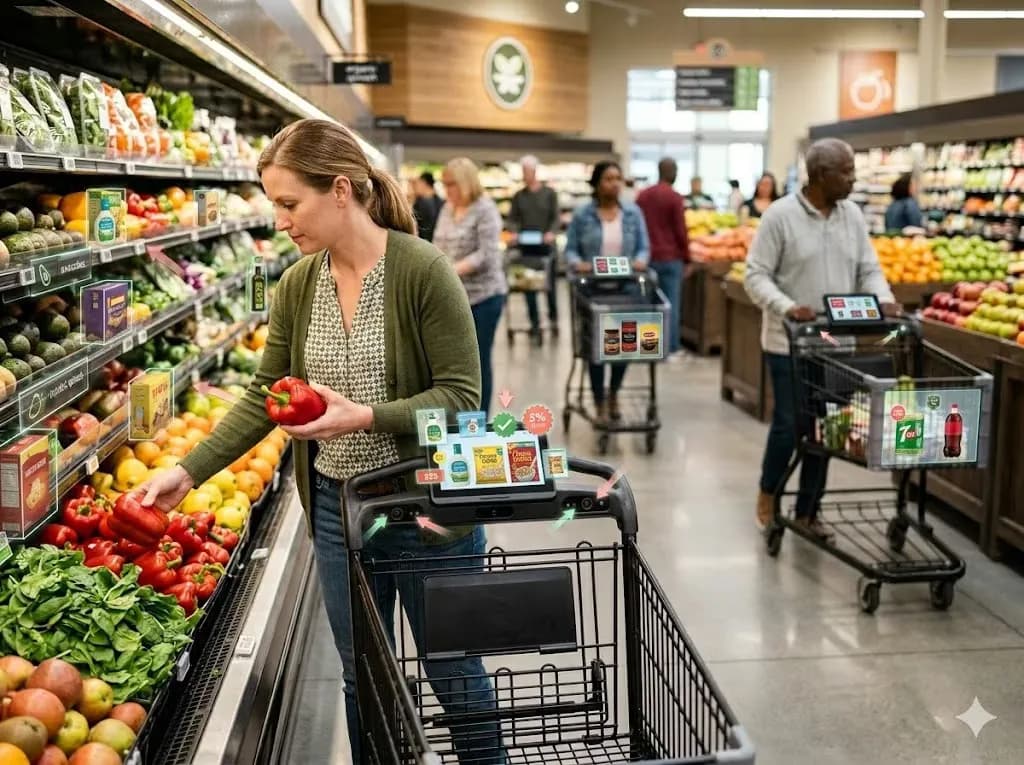
The proprietary Caper Carts are equipped with multiple cameras, digital scales, a touchscreen, and in-store location tracking systems. According to Instacart, this is part of its "physical AI" concept for the retail sector. On-cart data processing is combined with cloud-based artificial intelligence models trained on more than 1.6 billion online orders and the company's decade-long experience in grocery delivery.
The cart tracks which products the shopper has already selected and which shelves they are currently near. Depending on this information, advertisements, digital coupons, and various prompts appear on the built-in screen. For instance, the "Got everything you need?" feature reminds shoppers of items that might interest them. According to the company, such notifications have already increased the average purchase size by nearly 1%.
Furthermore, Caper Cart actively promotes the Weis Rewards loyalty program and the "Buy It Again" feature, which suggests previously purchased items to help shoppers fill their baskets more quickly.
Instacart notes that the number of Caper Cart deployments has tripled in recent years. Similar technologies are being explored by other American retail chains developing their own versions of intelligent shopping carts.
Thus, elements of artificial intelligence are gradually becoming a part of routine shopping trips. However, along with convenience, the volume of collected data is also expanding, providing stores with an increasing number of tools to influence consumer behavior directly during the product selection process.