


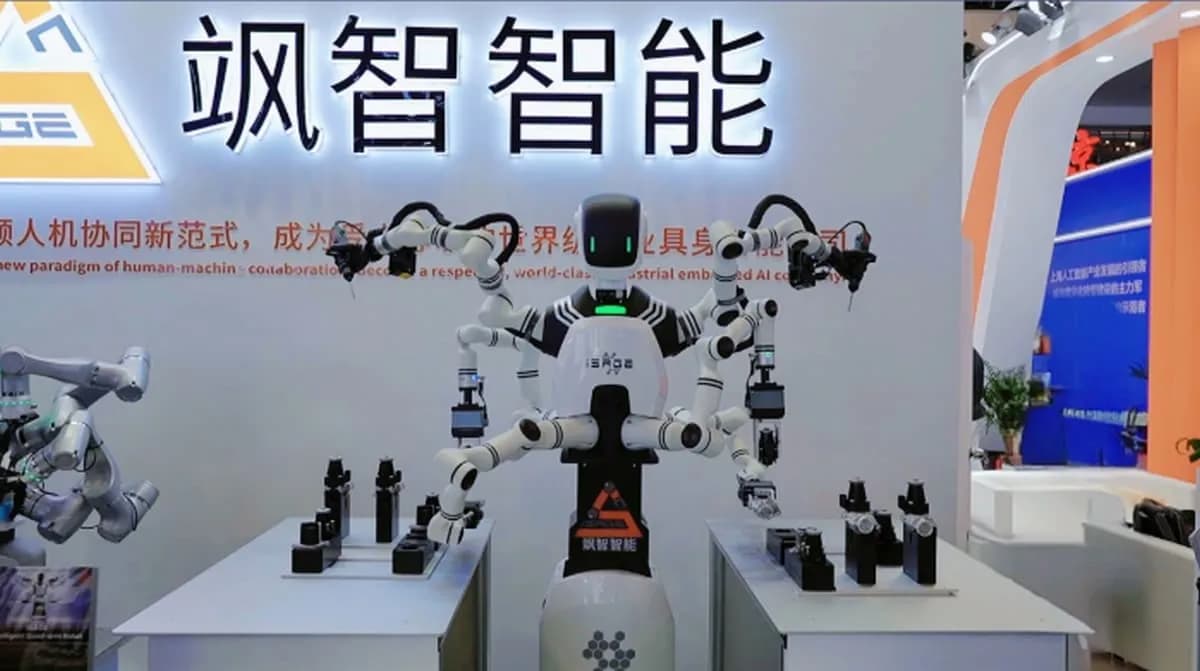
Eno is designed as a universal physical system capable of operating in real-world environments, ranging from factories and laboratories to hospitals and service facilities. Genesis AI emphasizes that the robot is not bound to classic form factors; its design is minimalist and focused on functionality rather than human imitation.
The core element of the system is the AI model Gene—a "robotic brain" that controls Eno as an autonomous agent. According to the company, the system is capable of not merely executing commands, but interpreting goals, adapting to changing conditions, remembering context, and executing multi-step tasks to completion.
One of Eno's distinct features will be an optional screen with a cognitive interface. It displays the system's status, its actions, and its interpretation of ongoing events in real time. According to the developers, this approach aims to increase the transparency of the robot's decisions and simplify human interaction with the autonomous system.
Structurally, Eno is built around a mobile wheeled base. Above it sits a vertical modular structure with segments that allow for adjustments to height and operating radius. When inactive, the elements fold down, reducing dimensions for storage.
The working manipulators are equipped with Genesis AI's proprietary robotic hands, which replicate the kinematics and functionality of a human hand. This allows the robot to use tools and equipment originally designed for humans, without requiring specialized adaptation of the environment.
The company emphasizes that the development of Eno was carried out in tandem with the Gene model, which made it possible to integrate the hardware platform and the AI core into a single system. This approach is intended to ensure seamless operation between the robot's "body" and "brain," eliminates any disconnect between control and perception.
The system is capable of performing complex, long-term tasks, from servicing production lines to preparing premises for shifts. The robot can analyze the situation, plan a sequence of actions, and adjust its behavior as conditions change.
According to the company's plans, the first commercial deliveries of Eno will begin by the end of 2026. Initially, the robot will be deployed in manufacturing, logistics, and laboratories, followed by the hospitality and medical sectors, and may later transition to domestic scenarios.